

Medical Exoskeleton Market Size to Reach USD 239.3 Million by 2032 from USD 112.2 Million in 2026
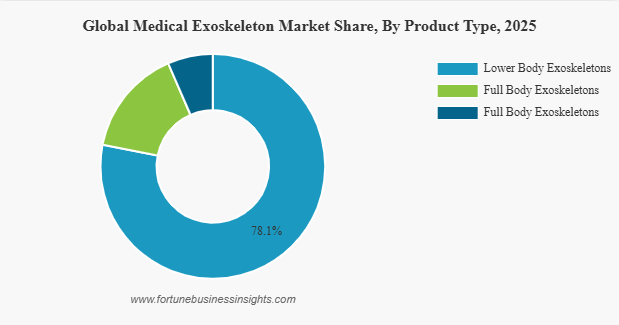
The medical exoskeleton market is growing at a 9.9% CAGR, driven by rising neurological disorders and adoption of robotic rehabilitation technologies.
PUNE, MAHARASHTRA, INDIA, February 4, 2026 /EINPresswire.com/ -- The global medical exoskeleton market was valued at USD 99.5 million in 2025 and is projected to grow from USD 112.2 million in 2026 to USD 239.3 million by 2032, registering a CAGR of 9.9% during the forecast period.Medical Exoskeleton Market Overview
These systems are increasingly deployed in hospitals, rehabilitation centers, and homecare environments to support gait training, posture correction, and mobility enhancement. Rising cases of spinal cord injuries, stroke, multiple sclerosis, Parkinson’s disease, and cerebral palsy are creating sustained demand for advanced rehabilitation solutions.
Technological advancements such as lightweight materials, AI-enabled gait algorithms, real-time motion sensing, and improved battery efficiency are improving clinical outcomes and expanding adoption. The increasing acceptance of robotic-assisted rehabilitation among clinicians, along with gradual reimbursement improvements in developed markets, is further supporting long-term market expansion.
Request a Free sample PDF:-
https://www.fortunebusinessinsights.com/enquiry/request-sample-pdf/medical-exoskeleton-market-115112
Market Segmentation
The medical exoskeleton market is segmented based on mobility type, component type, application area, distribution model, and patient category. By mobility type, the market is categorized into stationary exoskeleton systems and mobile exoskeleton systems. Stationary systems are primarily used in clinical and rehabilitation center settings for structured gait training and therapy sessions, while mobile systems are designed for personal use and allow patients to perform daily activities with assisted mobility in real-world environments.
Based on component type, the market is segmented into sensors, actuators, control systems, power units, and mechanical structures. Sensors and control systems account for a significant share as they enable real-time motion tracking, balance correction, and adaptive gait control. Power units and actuators are also critical components, as they directly influence device performance, load-bearing capacity, and patient safety, making them a key focus area for technological innovation.
By application area, the medical exoskeleton market is segmented into gait training, posture support, upper-limb rehabilitation, balance training, and strength augmentation therapy. Gait training represents the dominant application, supported by rising demand for robotic-assisted walking therapy for spinal cord injury and stroke patients. Upper-limb rehabilitation is gaining traction due to increasing clinical focus on restoring arm and hand function in post-stroke and neuromuscular disorder patients.
In terms of distribution model, the market is segmented into direct sales, institutional procurement, and leasing or rental models. Institutional procurement dominates, as hospitals and rehabilitation centers prefer long-term equipment investments. However, leasing and rental models are gaining popularity, particularly among smaller clinics and homecare users, as they reduce upfront capital costs and improve accessibility to advanced robotic rehabilitation technologies.
By patient category, the market is segmented into adult patients, pediatric patients, and geriatric patients. Adult patients account for the largest share due to the high incidence of spinal cord injuries and stroke in working-age populations. The geriatric segment is expected to witness strong growth, driven by increasing life expectancy, higher prevalence of age-related mobility impairments, and growing adoption of assistive robotic devices for elderly rehabilitation and fall prevention.
Speak To Analyst:-
https://www.fortunebusinessinsights.com/enquiry/speak-to-analyst/medical-exoskeleton-market-115112
Key Players
Ekso Bionics Holdings, Inc. (U.S.)
CYBERDYNE Inc. (Japan)
Lifeward, Inc. (U.S.)
Hocoma AG (Switzerland)
Ottobock SE & Co. KGaA (Germany)
Rex Bionics Ltd. (New Zealand)
BIONIK Laboratories Corp. (Canada)
Fourier Intelligence (China)
Wandercraft (France)
Honda Motor Co., Ltd. (Japan)
Report Coverage
The report provides a comprehensive analysis of the global medical exoskeleton market, covering product type, technology, indication, end user, and regional performance. It includes market sizing, growth trends, competitive landscape, and recent technological developments. The study also evaluates regulatory frameworks, reimbursement trends, and emerging clinical applications to offer a holistic view of market dynamics.
Drivers and Restraints
Market Drivers
The rising burden of neurological and mobility-related disorders is the primary growth driver. Millions of patients worldwide require long-term rehabilitation due to stroke, spinal cord injuries, and neurodegenerative diseases. Medical exoskeletons enable repetitive, intensive gait training that supports neuroplasticity and improves recovery outcomes.
Growing investments in rehabilitation robotics, expanding clinical evidence, and increasing acceptance of robotic-assisted therapy are accelerating market adoption. Favorable healthcare policies in countries such as the U.S. and Japan are also supporting clinical uptake.
Market Restraints
High device costs remain a major barrier. Powered medical exoskeletons typically cost between USD 70,000 and USD 150,000 per unit, limiting adoption in smaller healthcare facilities and emerging markets. Limited and inconsistent reimbursement coverage in several regions further restricts broader penetration.
Additionally, the need for trained personnel, infrastructure upgrades, and ongoing maintenance increases total ownership costs, slowing adoption in cost-sensitive healthcare systems.
Regional Insights
North America
North America dominated the global medical exoskeleton market, valued at approximately USD 45.7 million in 2025. Strong reimbursement progress, high prevalence of spinal cord injuries and stroke, and advanced rehabilitation infrastructure support regional leadership. The U.S. accounted for the majority of regional revenue and remains a key market for new product launches.
Europe
Europe is witnessing steady growth, driven by strong public healthcare systems and rising emphasis on long-term neurorehabilitation. Countries such as Germany, the U.K., and France are leading adopters of robotic rehabilitation technologies in hospital and specialty clinic settings.
Asia Pacific
Asia Pacific is emerging as a high-growth region due to aging populations, expanding healthcare infrastructure, and increasing adoption of robotics in rehabilitation. Japan plays a pivotal role, supported by its aging demographics and strong integration of robotics in healthcare. China and India are also showing increasing adoption, driven by investments in rehabilitation facilities.
Latin America & Middle East & Africa
These regions are experiencing gradual growth, supported by government-led healthcare modernization and investments in advanced rehabilitation centers. Gulf countries are investing in specialized neurological and rehabilitation care facilities, supporting market expansion.
Key Industry Developments
March 2025: Lifeward Ltd. received FDA 510(k) clearance for its ReWalk 7 personal exoskeleton device.
September 2024: Human in Motion Robotics received regulatory approval in Canada for its XoMotion exoskeleton.
April 2023: Harmonic Bionics registered its Harmony SHR exoskeleton with the U.S. FDA as a Class II device.
July 2022: Ekso Bionics received FDA approval to expand use of EksoNR for multiple sclerosis patients.
Related Reports:-
Human Augmentation Market
Wearable Robotic Exoskeleton Market
Ashwin Arora
Fortune Business Insights™ Pvt. Ltd.
+1 83390 92966
email us here
Legal Disclaimer:
EIN Presswire provides this news content "as is" without warranty of any kind. We do not accept any responsibility or liability for the accuracy, content, images, videos, licenses, completeness, legality, or reliability of the information contained in this article. If you have any complaints or copyright issues related to this article, kindly contact the author above.
